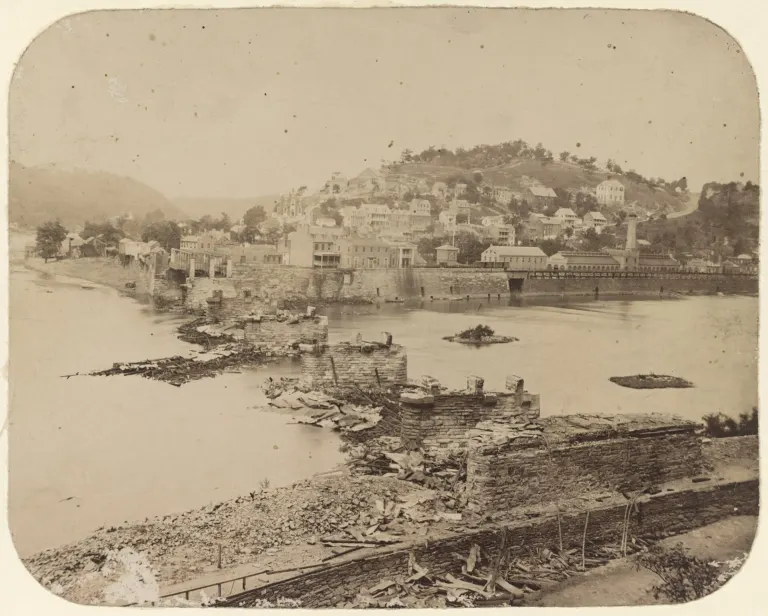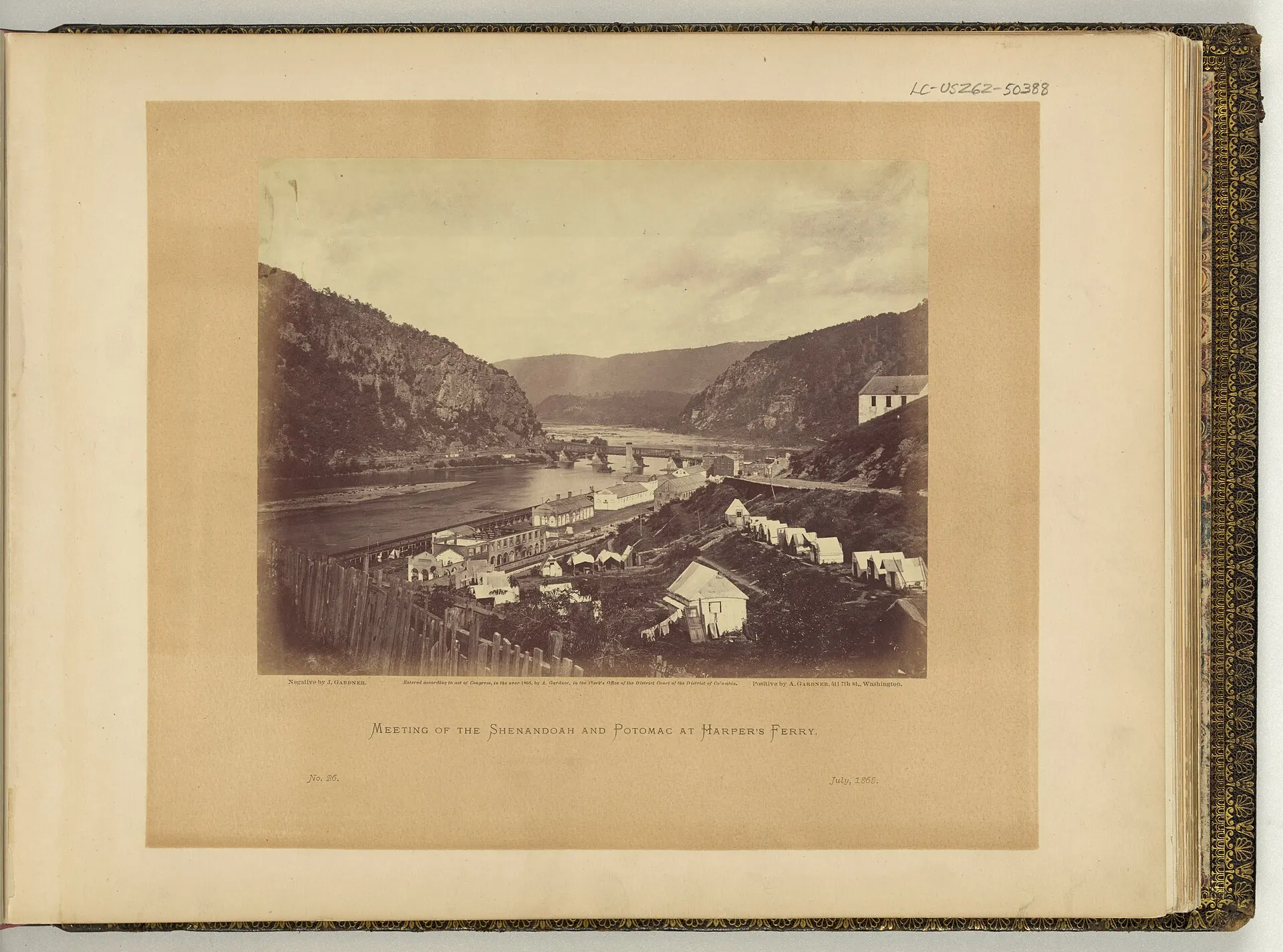
Harpers Ferry, West Virginia, went from a river ferry to a federal armory, the target of John Brown's raid, a Civil War prize that changed hands eight times, and the home of Storer College and the Niagara Movement. The facts below come from the National Park Service, which preserves the town as Harpers Ferry National Historical Park.
Key dates at a glance
| Town established | 1763, by the Virginia General Assembly |
| U.S. Armory | Construction began 1799; more than 600,000 firearms made 1801–1861 |
| John Brown's raid | October 16–18, 1859 |
| Civil War | Changed hands eight times; 12,500 Union troops surrendered Sep 15, 1862 |
| Storer College | 1867–1955 |
| Record flood | 36.5 ft, March 1936 |
| National park | Monument 1944; national historical park 1963 |
What happened at Harpers Ferry? A timeline
In short, a ferry crossing became a federal armory town, and the armory, rivers, canal and railroad put it at the center of events from the 1790s to the Civil War.
| Year | What happened |
|---|---|
| 1732 | Peter Stephens settles at the confluence |
| 1747 | Robert Harper buys the site (125 acres) and runs a ferry across the Potomac |
| 1763 | Virginia's General Assembly establishes the town as "Shenandoah Falls at Mr. Harper's Ferry" |
| Oct 25, 1783 | Thomas Jefferson views the river gap from the rock now called Jefferson Rock |
| 1790s | George Washington chooses Harpers Ferry for a national armory; Congress authorizes two national armories on Apr 2, 1794 |
| 1799 | Construction of the federal armory begins |
| 1803 | Meriwether Lewis gets weapons and supplies from the armory for the Lewis and Clark Expedition |
| 1820 | John H. Hall begins making his breech-loading rifle; Hall's Rifle Works (1820–1840) pioneers interchangeable parts |
| 1833 | The C&O Canal reaches Lock 33, across the Potomac |
| 1834 | The B&O Railroad reaches the Maryland shore opposite town |
| Oct 16–18, 1859 | John Brown's raid on the armory and arsenal |
| Apr 18, 1861 | U.S. soldiers burn the armory and arsenal to keep them from Virginia militia, a day after Virginia secedes |
| 1861–1865 | The town changes hands eight times |
| Sep 15, 1862 | Stonewall Jackson captures the 12,500-man Union garrison, the largest surrender of U.S. troops in the war |
| Jul 4–7, 1864 | The Union defense delays Jubal Early's Confederates, helping save Washington |
| Oct 2, 1867 | Storer College is founded, starting as Storer Normal School in the Lockwood House |
| 1881 | Frederick Douglass speaks on John Brown at Storer College |
| Aug 15–19, 1906 | The Niagara Movement holds its first public meeting in the U.S. at Storer College |
| Mar 18–19, 1936 | Record flood crests at 36.5 ft |
| 1944 | Harpers Ferry National Monument is established |
| 1955 | Storer College closes |
| 1963 | Renamed Harpers Ferry National Historical Park |
Sources: NPS, Harpers Ferry by the Numbers, NPS stories and the other NPS pages listed below.
Why is it called Harpers Ferry, and why no apostrophe?
The town takes its name from Robert Harper, who bought the site in 1747 and ran the ferry. It was originally written Harper's Ferry, and the 1763 Virginia act named it "Shenandoah Falls at Mr. Harper's Ferry." The U.S. Board on Geographic Names, founded in 1890, discourages possessive apostrophes in place names, and the apostrophe was dropped in the 1890s (the year is often given as 1891). You'll still see "Harper's Ferry" in older documents and in quotations from the 1800s.
Harper himself died in 1782 and is buried in Harper Cemetery, a 4-acre burial ground he set aside. Harper House, finished in 1782, is the oldest surviving building in Lower Town.
Basic facts about the town today, from its county and ZIP code to its population, are on our Harpers Ferry facts page.
What did Thomas Jefferson say about Harpers Ferry?
Jefferson stood on the rock that now bears his name on October 25, 1783, and later described the view in Notes on the State of Virginia:
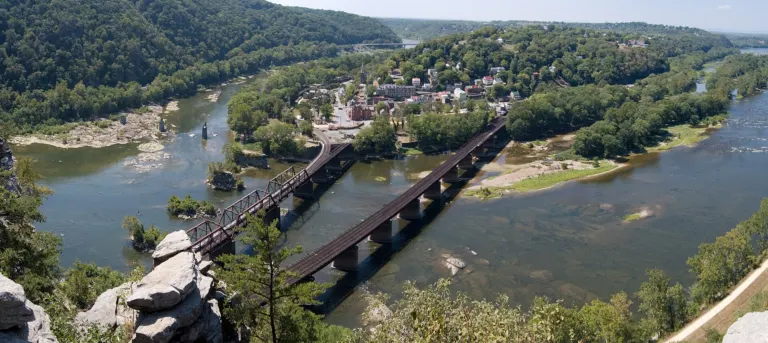
"The passage of the Patowmac through the Blue ridge is perhaps one of the most stupendous scenes in nature. You stand on a very high point of land. On your right comes up the Shenandoah, having ranged along the foot of the mountain an hundred miles to seek a vent. On your left approaches the Patowmac, in quest of a passage also. In the moment of their junction they rush together against the mountain, rend it asunder, and pass off to the sea." … "This scene is worth a voyage across the Atlantic."
— Thomas Jefferson, Notes on the State of Virginia, Query IV (1787 edition)
The spelling follows the 1787 London edition. You can walk to Jefferson Rock above Lower Town, but climbing on it is prohibited.
What you see today
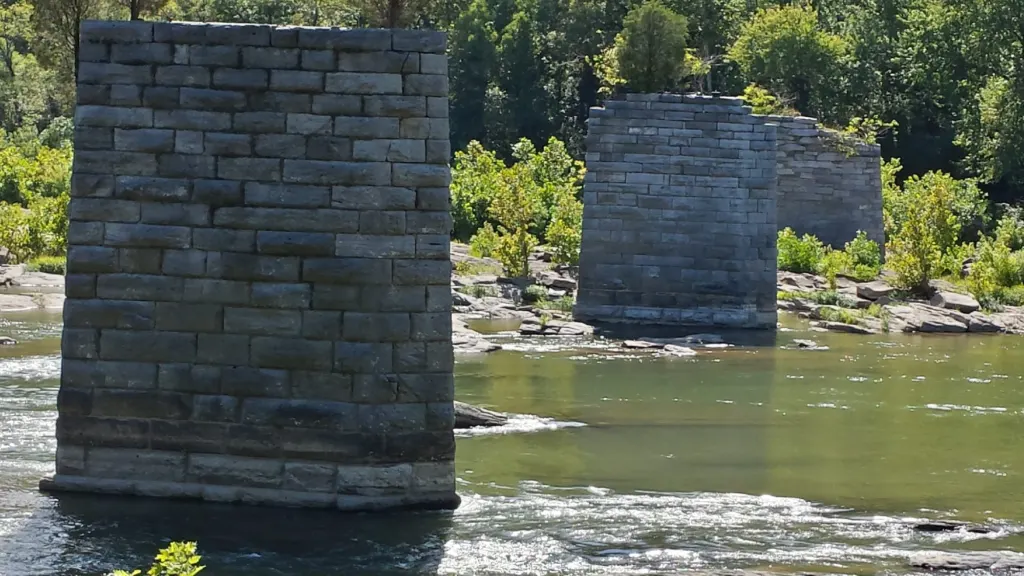
Jefferson's description still holds up. From the path at Jefferson Rock you look straight at the gap where the Potomac cuts through the Blue Ridge, with the Shenandoah coming in below. The railroad bridges came later, but the shape of the view is the one he wrote about.
Why was Harpers Ferry important?
The armory made it important. George Washington chose the site in the 1790s for one of two national armories, which made more than 600,000 muskets, rifles and pistols between 1801 and 1861. John H. Hall's rifle works pioneered interchangeable-parts manufacturing, and the C&O Canal (1833) and B&O Railroad (1834) arrived soon after. Those weapons and transport links made Harpers Ferry a target, first for John Brown in 1859 and then for both armies.
What happened at Harpers Ferry in the Civil War?
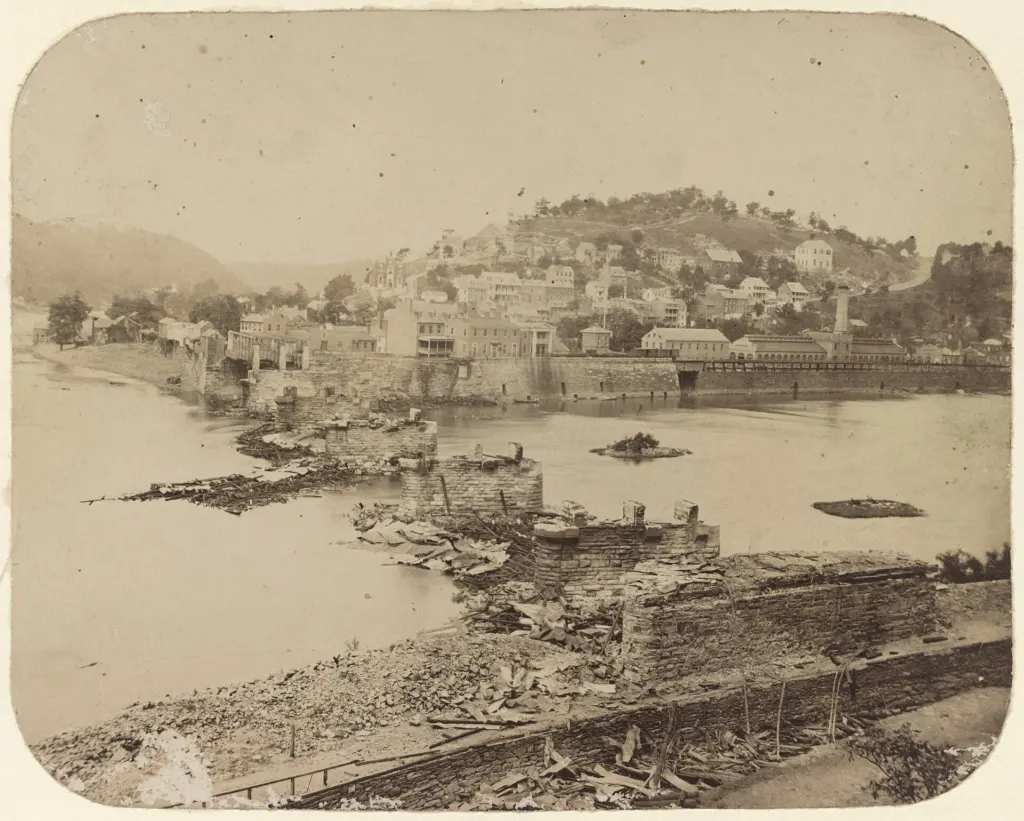
Harpers Ferry changed hands eight times between 1861 and 1865; Union forces held it for about 80 percent of the war. On April 18, 1861, less than a day after Virginia seceded, U.S. soldiers burned the armory and arsenal to keep them from Virginia militia. In the September 12–15, 1862 Battle of Harpers Ferry, Stonewall Jackson captured its 12,500-man Union garrison, the largest surrender of U.S. troops during the war. In July 1864, Union defenders delayed Jubal Early's advance, which helped save Washington.
You can walk the 1862 battlefield on Bolivar Heights, Schoolhouse Ridge and the Murphy-Chambers Farm; see the hiking guide for trail details.
What was Storer College?
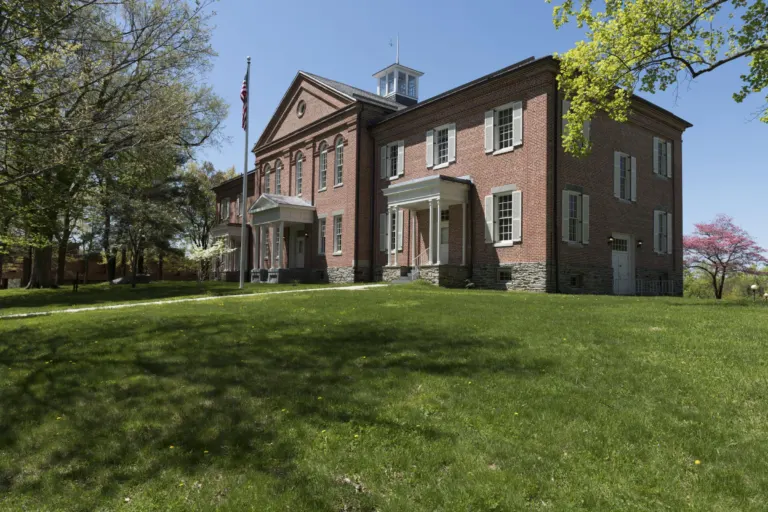
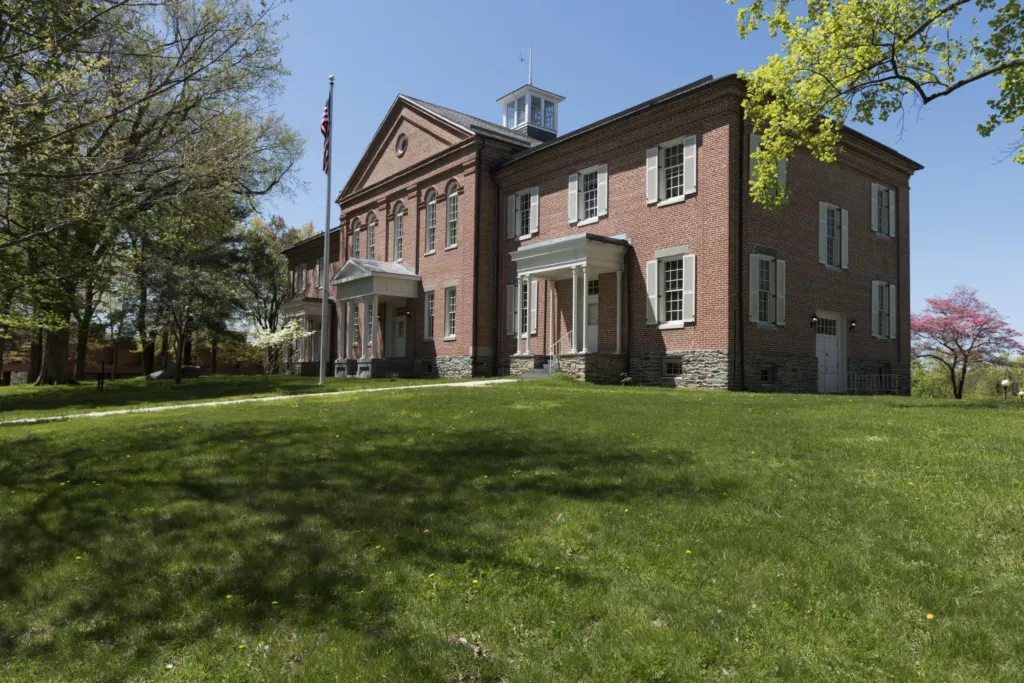
Storer College was one of the first schools to offer higher education to Black Americans. It grew out of a primary school opened in 1865 and was founded on October 2, 1867 by Freewill Baptists, starting as Storer Normal School in the Lockwood House. Frederick Douglass spoke there about John Brown in 1881. In August 1906, the Niagara Movement, the civil rights organization led by W.E.B. Du Bois, held its first public meeting in the United States on the campus; many of its members later formed the backbone of the NAACP. The college closed in 1955, after Brown v. Board of Education ended state support. The park preserves the former campus, including Anthony Hall.
How bad were the Harpers Ferry floods?
The worst flood on record crested at 36.5 feet on March 18–19, 1936, sweeping away the Bollman highway bridge and the Shenandoah bridge. The 1870 flood killed 42 people on Virginius Island, and the 1924 flood closed the C&O Canal for good.
Where can you see this history today?
Most of it is inside Harpers Ferry National Historical Park. As of November 2026, John Brown's Fort and the John Brown Museum are open, while Harper House and the Civil War Museum are among the buildings temporarily closed; check the NPS conditions page before you go.
- John Brown's Raid: what happened in October 1859, why, and which sites you can visit.
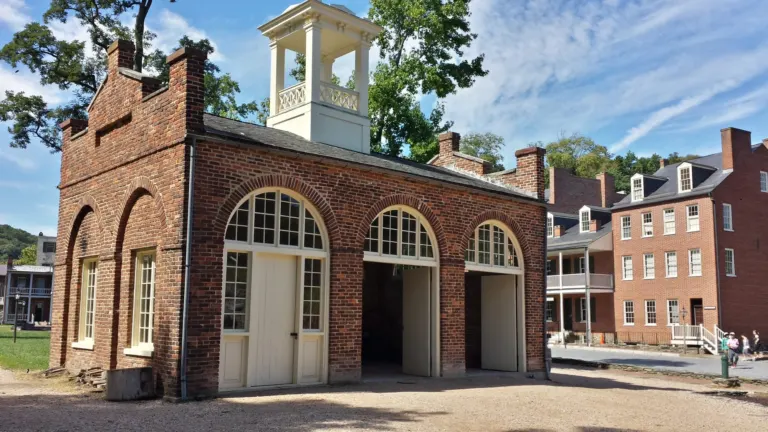
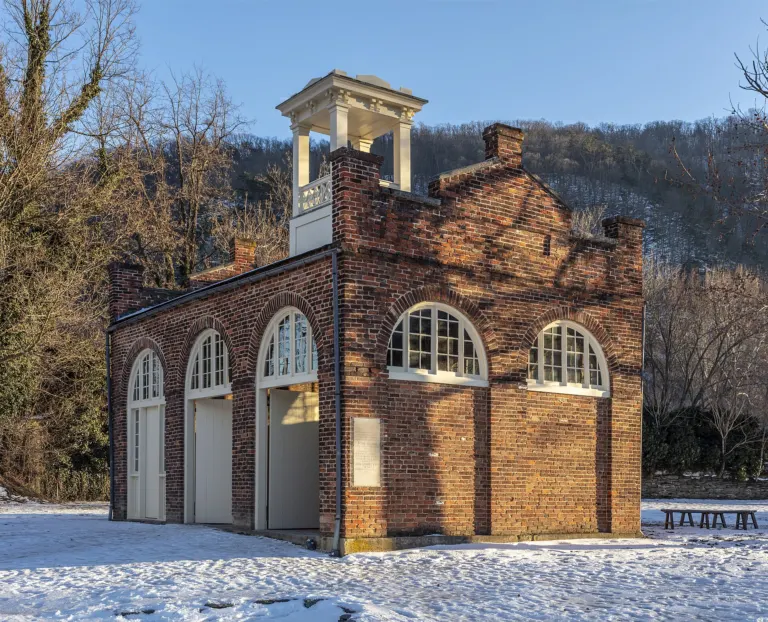
- John Brown's Fort: the 1848 armory engine house where Brown made his last stand, and why it has moved four times.
- Harpers Ferry in the Civil War: the 1862 siege step by step and the battlefield trails you can walk.
- The Harpers Ferry Armory: what it made, from the Model 1803 rifle to the Hall rifle, and what is left today.
- Storer College: Frederick Douglass's 1881 speech, the 1906 Niagara Movement meeting and the campus today.
If you only have an hour
Go to John Brown's Fort, then walk to The Point. They're a few minutes apart in Lower Town, and between them you get the raid, the armory and the meeting of the rivers.
Planning a visit? See parking, fees and the shuttle and where to stay.