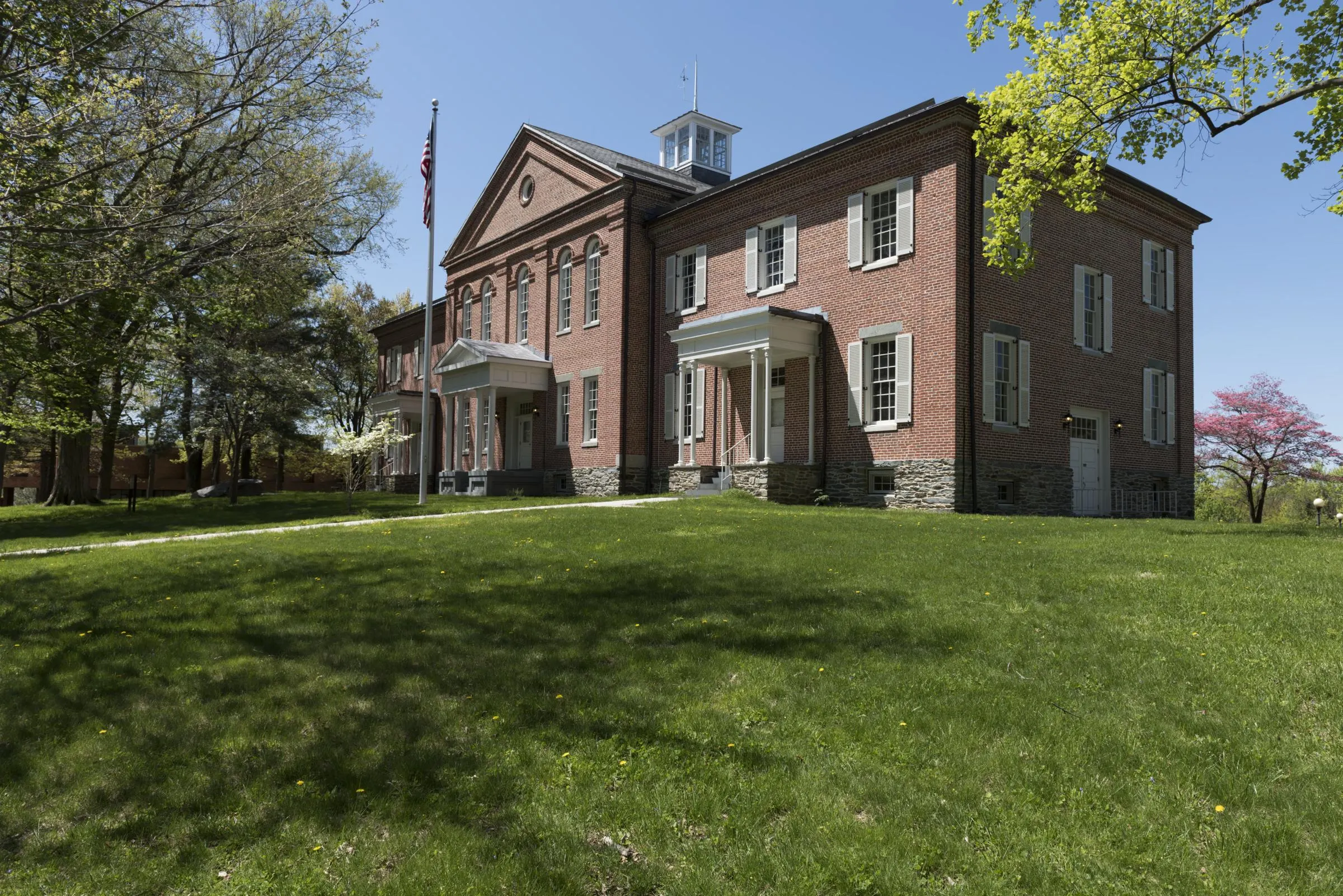
Storer College stood on Camp Hill above Lower Town Harpers Ferry for almost ninety years, from 1867 to 1955. It began as a school for people freed from slavery, grew into a college open to both sexes and all races, and became a gathering place for Black Americans who were fighting for full civil rights. Frederick Douglass spoke there in 1881, and in 1906 the Niagara Movement, the forerunner of the NAACP, held its first public meeting in the United States on the campus. This guide covers the college's history and what you can see on Camp Hill today. The facts come from the National Park Service, which preserves the former campus as part of Harpers Ferry National Historical Park.
Know before you go
| Years | Founded October 2, 1867; closed 1955 — NPS |
| Where | Camp Hill, above Lower Town; walk up from Lower Town on the Appalachian Trail or drive |
| What you can see | Anthony Hall, the Lockwood House, the Brackett House and the Morrell House, from outside |
| Interiors | Anthony Hall open only during advertised special events — NPS |
| Exhibit (Nov 2026) | "Storer College & the Niagara Movement" in Lower Town, open — NPS conditions |
| Key dates | Douglass speech May 30, 1881; Niagara Movement August 15–19, 1906 |
| Nearby on Camp Hill | Jefferson Rock, Harper Cemetery, the ATC Visitor Center |
| Fee | Park entrance fee applies to the park — fees & parking guide |
What was Storer College?
Storer College was a school in Harpers Ferry, West Virginia, founded on October 2, 1867, that offered education beyond the primary level to Black students, beginning with people freed from slavery. The NPS says it "grew into a college open to both sexes and all races," and that for 25 years it was the only school in West Virginia where a person of color could get an education beyond primary school. More than 7,000 students passed through it before it closed in 1955.
The college started small. In 1865 the Rev. Nathan Brackett of the Freewill Baptists opened a one-room mission school for formerly enslaved people, working from the Lockwood House on Camp Hill. By 1867 he supervised 16 teachers and schools for 2,500 students in the Shenandoah Valley. A wealthy Maine businessman, John Storer, offered the Freewill Baptists a $10,000 matching grant, and supporters raised the match the day before the offer expired. The NPS credits the Freedmen's Bureau, the Freewill Baptists and Storer together with founding the school.
Storer College timeline
Storer College grew from a mission school into a four-year college over seven decades. Dates come from the NPS unless marked as Wikipedia.
| Year | What happened |
|---|---|
| 1865 | Nathan Brackett opens a mission school for formerly enslaved people, based in the Lockwood House |
| Oct 2, 1867 | Storer College is founded |
| 1869 | Anthony Hall, the former armory superintendent's house, becomes the school's headquarters |
| May 30, 1881 | Frederick Douglass gives his address on John Brown at the college's fourteenth anniversary |
| 1903 | The college begins raising money to buy John Brown's Fort |
| Aug 15–19, 1906 | The Niagara Movement holds its first public meeting in the U.S. on campus |
| 1909 | Storer brings John Brown's Fort to Camp Hill |
| 1938 | Storer becomes a four-year college (Wikipedia) |
| 1955 | Storer College closes |
| 1960 | The National Park Service acquires John Brown's Fort from the campus |
| 1964 | The NPS Stephen T. Mather Training Center opens on the former campus |
What did Frederick Douglass say at Storer College in 1881?
Frederick Douglass spoke at Storer College on May 30, 1881, delivering an address on John Brown at the school's fourteenth anniversary. The NPS points out who sat on the platform: Andrew Hunter, the Charles Town prosecutor who had won Brown's conviction in 1859. With Hunter listening, Douglass defended Brown, arguing that Brown "did at least begin the war that ended slavery."
The speech was printed afterward, and the proceeds were set aside to endow a John Brown professorship at Storer. Wikipedia notes that Douglass was a member of the college's board of trustees at the time.
What happened at the Niagara Movement meeting at Storer College?
The Niagara Movement, the civil rights group led by W.E.B. Du Bois, held its first public meeting in the United States at Storer College from August 15 to 19, 1906. The movement had begun in 1905 with 29 men meeting in Canada after they were refused rooms in Buffalo, New York. By the time it came to Harpers Ferry it had more than fifty members, and on August 17, 1906 it granted women full and equal membership. The NPS says the meeting was held in Anthony Hall.
On "John Brown's Day," members began a silent procession at 6:00am to John Brown's Fort, which then stood on the Murphy Farm outside town. They took off their shoes and socks and walked single file around the fort, singing. On the final day, August 19, Du Bois's "Address to the Country" was read, declaring that the movement would not accept "one jot or tittle less than our full manhood rights." The Niagara Movement lasted until 1911, and the NPS says most of its members became the backbone of the new NAACP.
Retrace the 1906 pilgrimage
The NPS has led commemorative walks to the 1906 site of John Brown's Fort on the Murphy Farm in past Augusts. The site is on the park's Murphy-Chambers Farm Trail, so you can visit it any day in daylight hours. Check the park's news page for upcoming programs.
Why did Storer College close?
Storer College closed in 1955 after it lost its state funding. Following the 1954 Brown v. Board of Education decision, the West Virginia Board of Education recommended ending its $20,000 annual payment to Storer. The NPS says the board preferred to support state schools that were centrally located, with modern buildings, more students, and no debt or religious ties. Wikipedia's sourced history adds that the college had never sought regional accreditation and carried accumulated debt, and that only 88 students were enrolled in its final year. The college's endowment was later merged with Virginia Union University, which counts Storer graduates among its alumni.
Who went to Storer College?
More than 7,000 students attended Storer College, according to the NPS. Wikipedia's list of alumni includes:
- J.R. Clifford (class of 1875), the first Black attorney in West Virginia.
- Coralie Franklin Cook (1880), later a professor at Howard University.
- John Francis Wheaton (1882), the first Black member of the Minnesota Legislature.
- Nnamdi Azikiwe, who studied at Storer from 1925 to 1927 and later became the first President of Nigeria.
The NPS holds oral histories with Storer alumni, which you can find through the Storer College page.
What can you see at the Storer College campus today?
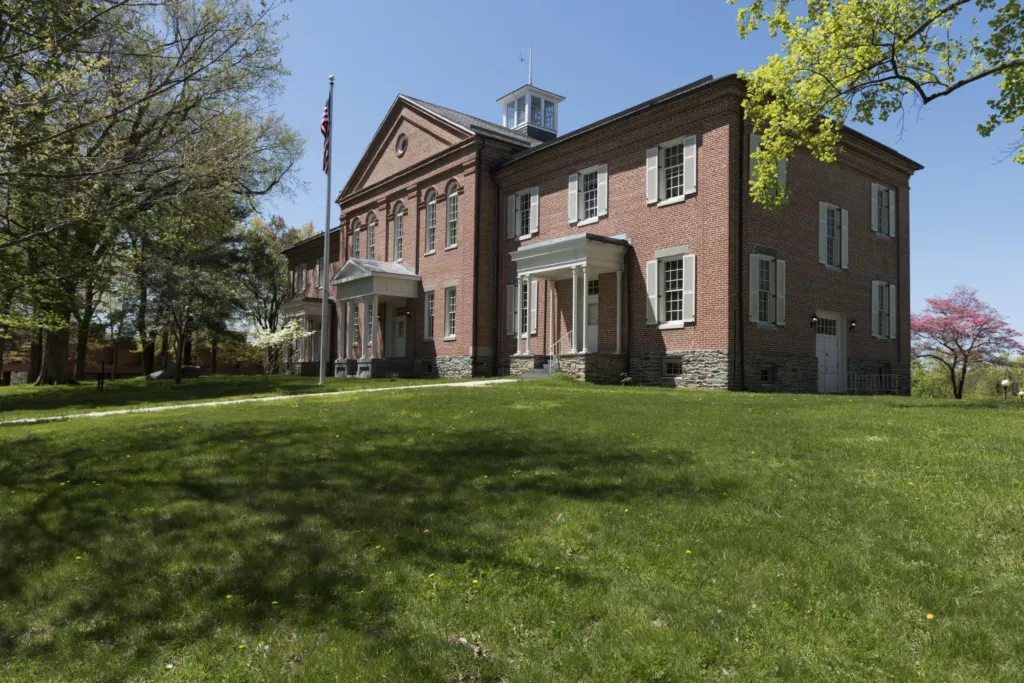
You can walk the former Storer College campus on Camp Hill and see several of its buildings from outside, though most are not open to the public. Many of them began as homes for armory officials. Anthony Hall, the superintendent's home, survives, and the NPS says three more officials' mansions, the Lockwood, Brackett and Morrell houses, still look much as they did during the Civil War:
| Building | Built as | Storer College use | Visiting |
|---|---|---|---|
| Anthony Hall | 1848 home of the armory superintendent | School headquarters from 1869; site of the 1906 Niagara Movement meeting | Interior open only during advertised special events |
| Lockwood House | 1848 home of the armory paymaster | First base of the 1865 mission school; later classrooms and a dormitory | Exterior restored to its Civil War look in the late 1960s |
| Brackett House | Armory official's mansion | Part of the original campus | View from outside |
| Morrell House | Armory official's mansion | Part of the original campus | View from outside |
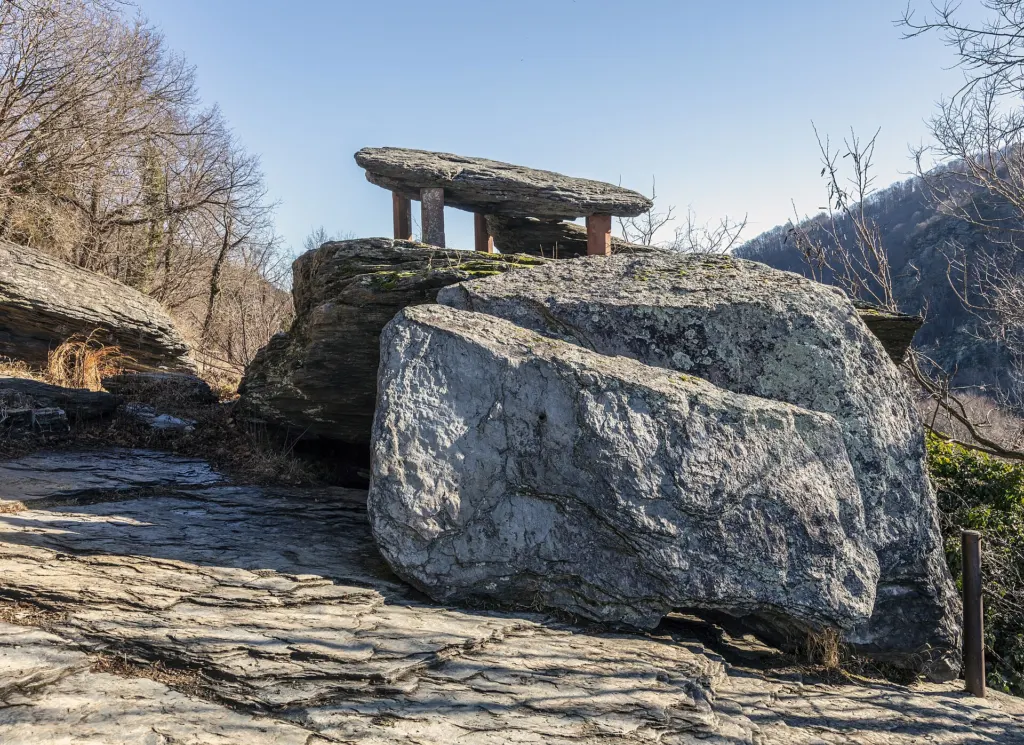
The NPS says you can drive to Camp Hill or hike up from Lower Town on the Appalachian Trail, stopping at Jefferson Rock on the way. The park's Camp Hill trail runs up to 1.8 miles round trip. Camp Hill also holds Harper Cemetery and the Appalachian Trail Conservancy Visitor Center. The building where John Brown's Fort stood on campus from 1909 to 1968 has since returned to Lower Town; see our John Brown's Fort guide.
For the story told indoors, the NPS exhibit "Storer College & the Niagara Movement" in Lower Town is open as of November 2026. Check the NPS conditions page before you go, since several other Lower Town buildings are temporarily closed.
What is the NPS training center on Camp Hill?
Since 1964 the former Storer campus has housed the Stephen T. Mather Training Center, where the National Park Service trained new rangers and cultural-resource staff, and the NPS says Anthony Hall "now serves as a training center for the National Park Service." In July 2025, the Interior Department announced it was ending the center's training programs as part of a consolidation with the Albright Training Center at Grand Canyon, according to The Inter-Mountain. We could not confirm the center's status as of November 2026; check with the park at 304-535-6029 if you plan to visit for an event there.
How do you plan a visit to Storer College?
Park at the Visitor Center at 171 Shoreline Drive and take the shuttle to Lower Town, then walk up to Camp Hill, or drive up and check parking locally. The park entrance fee applies. See our parking, fees and shuttle guide, the Jefferson Rock and Lower Town walking guide, and where to stay. For more history, start at the Harpers Ferry history hub, then read about John Brown's raid, which Douglass and the Niagara Movement both honored, and Harpers Ferry in the Civil War.